Exploring Emotions Happy: A Guide for Educators and Therapists
Supporting students in navigating their internal worlds is a fundamental aspect of modern education and therapy. For professionals working with young learners, the challenge often lies not in teaching academic concepts, but in helping children identify, understand, and express complex feelings and emotions. The resource known as Exploring Emotions Happy has emerged as a targeted tool designed to assist school psychologists, speech therapists, special education teachers, and general educators in this critical area. This article evaluates the utility of this journal-based approach, examining its benefits, ideal use cases, and considerations for those deciding whether it aligns with their instructional goals.
Understanding the Resource
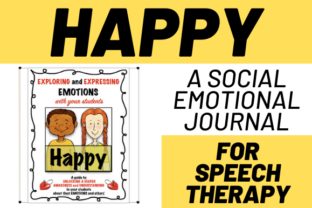
Exploring Emotions Happy is a structured journaling resource focused specifically on the emotion of happiness. While happiness may seem straightforward, many students, particularly those with developmental delays or social communication challenges, struggle to pinpoint what triggers this feeling, how it manifests physically, and how to express it appropriately. This resource moves beyond simple identification, encouraging a deeper exploration of the context and nuance of positive emotions.
The core premise is that by mastering the understanding of one primary emotion, students can build a framework for understanding others. The journal provides guided prompts and activities that make it easier for adults to support students as they explore this specific emotional state. It is designed to be a practical aid for professionals who need structured materials to facilitate social emotional learning activities without having to create content from scratch.
Why Professionals Are Turning to Structured Emotional Journals
Many educators and therapists report that their students struggle significantly with identifying feelings and emotions. Traditional verbal discussions may not be effective for all learners, especially those who are non-verbal, have limited vocabulary, or experience anxiety when asked to articulate their internal states. A written or visual journal offers a low-pressure alternative.
For school psychologists and special education teachers, the value lies in the structure. The journal acts as a scaffold, breaking down abstract concepts into manageable steps. This is particularly relevant for autism emotions work, where concrete examples and repetitive practice are often necessary for skill acquisition. By focusing on "happy," the resource allows for repeated exposure to positive reinforcement, which can help build confidence in students who may otherwise feel overwhelmed by more negative or complex emotions.
Benefits and Practical Applications
One of the primary advantages of using a dedicated resource like Exploring Emotions Happy is its versatility across different therapeutic and educational settings. Here are several ways it can be integrated into practice:
- Speech Therapy Integration: For speech-language pathologists, the journal serves as an excellent vehicle for expanding vocabulary related to emotions speech therapy goals. It provides context for using descriptive adjectives and cause-and-effect sentence structures.
- Early Childhood Education: In emotions kindergarten and emotions preschool classrooms, the simplified prompts can be adapted for group circles or individual quiet time, helping young children label their experiences during play.
- ESL Support: Students learning English as a second language benefit from visual and contextual clues. These types of emotions esl activities help bridge the gap between language acquisition and emotional literacy, allowing students to connect new words with personal experiences.
- Specialized Support: For students on the autism spectrum, understanding autism feelings can be challenging due to differences in sensory processing and social cue interpretation. A focused journal helps isolate variables, making the learning process less chaotic.
The resource also supports the creation of a consistent routine. When students know what to expect from their emotional check-ins, anxiety decreases, and engagement increases. This consistency is crucial for building long-term emotional awareness.
Considerations and Tradeoffs
While Exploring Emotions Happy offers significant benefits, it is important to consider whether it fits your specific needs. No single resource is a universal solution. Here are some factors to evaluate:
Scope of Content: As the title suggests, this resource focuses on happiness. While this is a strong starting point, it is not a comprehensive curriculum for all feelings and emotions. Educators looking for a complete year-long SEL curriculum may need to supplement this with materials covering sadness, anger, fear, and surprise. It is best viewed as a module within a broader program rather than a standalone solution.
Student Readiness: The effectiveness of journaling depends on the student’s fine motor skills and basic literacy or symbolic understanding. For students with severe motor impairments or those who are pre-literate, the journal may require significant adaptation, such as using stickers, stamps, or digital alternatives. In these cases, standard emotions worksheets that allow for circling or coloring might be more immediately accessible.
Individual vs. Group Use: Journals are inherently individual tools. If your primary goal is to facilitate large group discussions or peer-to-peer interaction, you may need to pair this resource with collaborative feelings and emotions activities that encourage sharing and dialogue. The journal prepares the student for the conversation, but it does not replace the social interaction itself.
Is This Resource Right for Your Practice?
Deciding whether to incorporate Exploring Emotions Happy into your toolkit depends on your current challenges and student demographics. It is likely a strong fit if:
- You work with students who have specific difficulty identifying positive emotions or expressing joy appropriately.
- You are a specialist (such as a speech therapist or school psychologist) looking for targeted, low-prep materials to use during individual sessions.
- Your students benefit from routine, structured, and repetitive learning formats.
- You already have a broader SEL framework but need specific, high-quality resources to deepen understanding of individual emotions.
Conversely, you might consider alternatives if:
- You need a comprehensive, all-in-one curriculum that covers the full spectrum of human emotion without additional purchases.
- Your students require highly interactive, kinesthetic, or digital-first learning experiences that a static journal cannot provide.
- You are working with a large general education classroom where individualized journaling is logistically difficult without extensive paraprofessional support.
Making an Informed Decision
When evaluating any educational resource, it is essential to align it with your specific instructional objectives. Exploring Emotions Happy is a specialized tool designed to unlock deeper awareness and understanding in students. It excels in providing structure for those who struggle with the abstract nature of feelings. By focusing on one emotion at a time, it reduces cognitive load and allows for mastery.
For professionals dedicated to supporting students with diverse needs, including those with autism or language delays, this journal offers a practical pathway to enhancing emotional literacy. It complements other emotions book resources and interactive activities, forming part of a holistic approach to social-emotional development. Before purchasing, consider your students' current abilities and your available time for implementation. If structured, individualized reflection aligns with your teaching style, this resource can be a valuable addition to your professional library, helping you feel more confident in guiding your students through their emotional journeys.